


If you're a founder already running a few AI agents, this one is for you. Your agents now work while you sleep, and somebody has to decide what they're allowed to touch.
It's 11 p.m. Before you close the laptop, you kick off three agents. One researches competitors' pricing pages, one drafts next week's newsletter, and one cleans up a lead list that's been rotting since August. At 7 a.m., one of two things is waiting. Maybe it's a tidy report with a short list of decisions for you. Or maybe it's a half-finished draft, a lead list with 200 contacts deleted, and an agent that spent the night stuck on a login page.
Which one you get usually comes down to whether anyone wrote the shift notes.
Hospitals figured this out a long time ago. The night crew keeps patients stable, runs the routine checks, and charts everything. The big calls wait for the day team, and everyone knows which calls those are before the shift starts. Founders need the same rules for their agents.
1. Write the Shift Notes
A nurse going off shift doesn't say "keep an eye on things." She hands over the chart: what's happening, what to watch, and when to call the doctor.
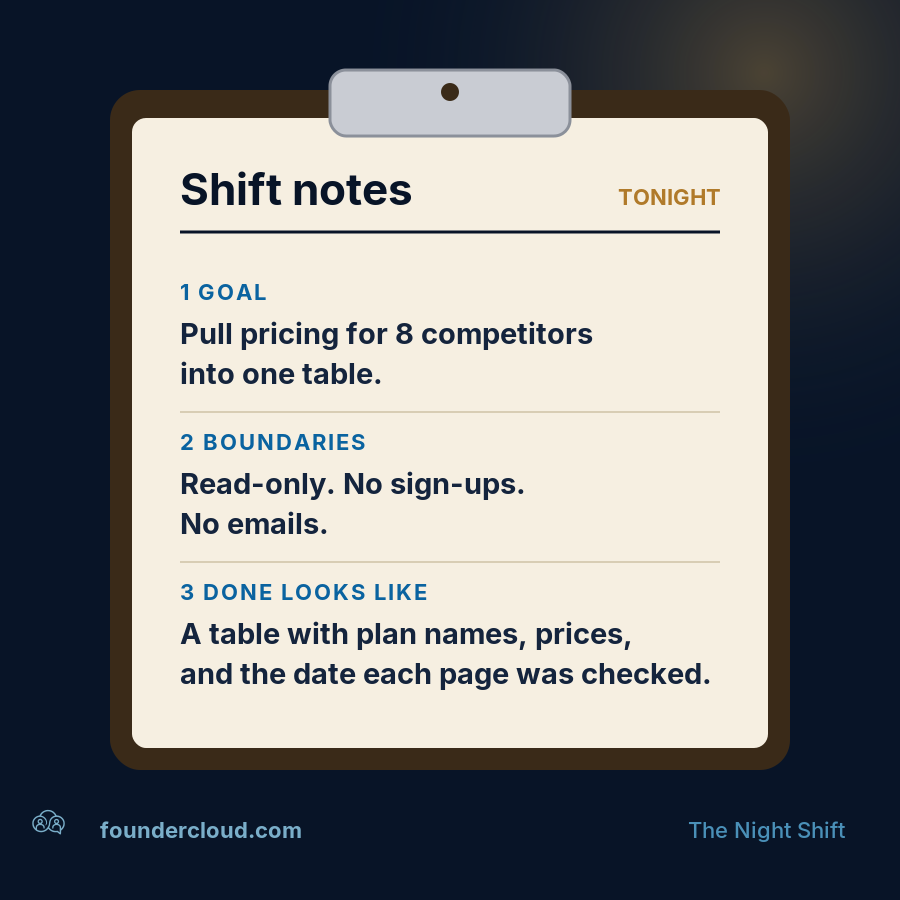
Your agents need the same before you log off. The goal: "Pull pricing for these eight competitors into one table." The boundaries: "Read-only. Don't sign up for anything and don't email anyone." And what done looks like: "A table with plan names, prices, and the date you checked each page."
That takes about five minutes to write. Skip it, and you'll spend thirty in the morning figuring out what the agent thought you meant.
2. Night Work: Reversible and Repeatable
The test for overnight work is simple. If the agent gets it wrong, can you undo it before anyone notices?
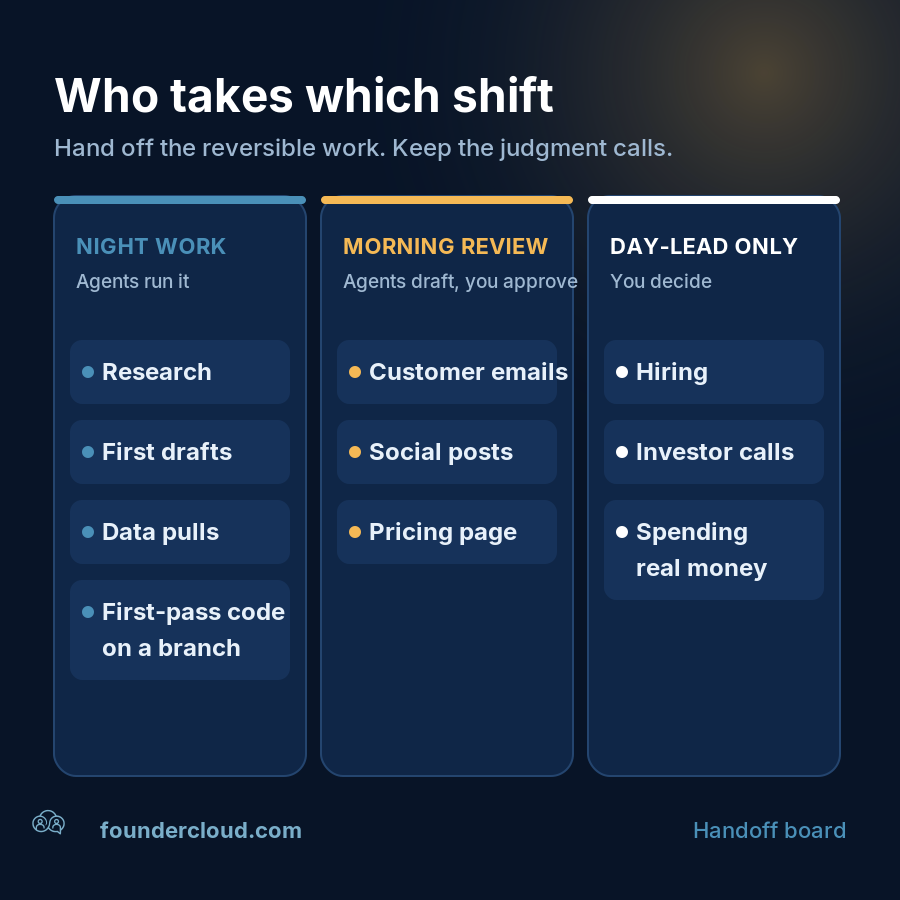
Research passes that test. So do first drafts, data pulls, tagging a CRM export, watching a competitor's changelog, and first-pass code on a branch nobody deploys. A bad result in any of those costs you a few minutes of review and nothing else.
Deleting records doesn't pass, which is how you end up 200 contacts short. Have the agent flag likely duplicates in a new column instead. You can delete them yourself in the morning in about a minute.
3. Morning Review: Agents Prepare, You Approve
Anything that goes out under your name waits for your eyes. That covers customer emails, social posts, anything published on your site, and pricing changes.
Agents still do most of the work here. Let them draft the reply to the customer who's been waiting since Tuesday, write the LinkedIn post, and build the new pricing page. Just stop them one step short of the send button. The last line of the shift notes can be as plain as "Leave it as a draft. Don't publish."
Honestly, this is where most of the value lands. You wake up to finished drafts, and your morning job is editing instead of staring at a blank page.
4. Day-Lead Only: The Calls That Stay With You
Some decisions never go to the night crew, no matter how good it is.
Hiring and firing stay with you. So do investor conversations, apologizing to a customer you let down, changes in strategy, and spending real money. An agent can research a candidate's public work or pull together the numbers for a board update. It shouldn't send the rejection email or decide which number you lead with.
A decent rule of thumb: if you'd be uncomfortable telling someone "the agent decided," it's a day-lead call.
5. Read the Night Report
A shift change only works if the day lead reads the chart.
Give it ten minutes with your first coffee. Check what got done, what got stuck, and what needs a decision from you. The stuck items matter more than they look. An agent that hit a login wall at 1 a.m. and quit is telling you the shift notes were missing something.
Fix the notes along with the output. If the pricing research comes back with stale numbers twice, add "check the date on each pricing page" to tomorrow's handoff. After a couple of weeks, the notes get good enough that most of the morning report reads "done."
Your agents can work the night shift. You still run the hospital.
Start tonight with one agent, one task, and five minutes of shift notes. If you try it, tell the FounderCloud community what made the morning report and what didn't.
6th November 2026