


The Submarine Strategy: Why Pressure-Tested Startups Win in the Deep
For the last decade, the universal mascot of the startup ecosystem was the Rocket Ship.
It was the emoji we put in our Slack statuses after closing a funding round. It was the metaphor investors used in their board meetings. "Get on the rocket ship."
But let's look at the physics of a rocket. It is designed for a zero-friction, zero-gravity environment. It requires a catastrophic, violent burn of extremely expensive fuel just to get off the launchpad. If the fuel runs out before it reaches orbit, the ship plummets back to earth and shatters.
The Rocket Ship was the perfect metaphor for the Zero Interest Rate Phenomenon (ZIRP) era. Capital was infinite, and the only goal was hyper-growth to escape the gravity of the competition.
In 2026, the atmosphere has changed. The capital markets are tight. The regulatory environment is heavy. Enterprise budgets are highly scrutinized. We are no longer operating in zero gravity. We are operating under immense, crushing pressure.
It is time to retire the Rocket Ship. The founders who will win this decade are building Submarines.
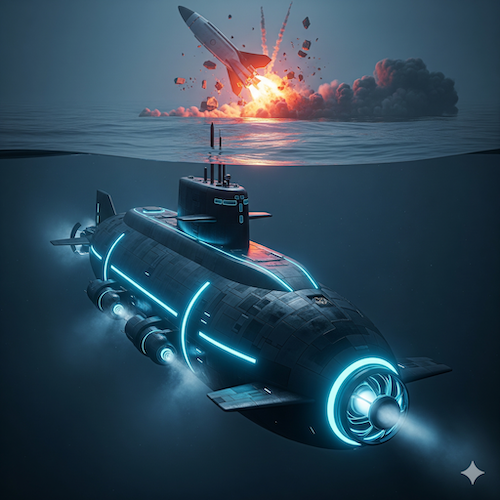
1. Designing for Crush Depth (The Hull)
A rocket is built of lightweight, fragile materials because every ounce of weight costs fuel. A submarine is built with a reinforced titanium hull designed to withstand the crushing weight of the ocean.
In a startup, your "hull" is your unit economics and your compliance posture.
ZIRP-era founders built fragile hulls. They subsidized the cost of their product with venture capital to artificially inflate user growth. When the market shifted and investors demanded profitability, the pressure mounted, the fragile hull buckled, and the companies imploded.
A Submarine founder builds for "crush depth" from Day 1. They charge what the product is actually worth. They don't subsidize acquiring bad customers. They invest heavily in unsexy things like SOC 2 compliance, data sovereignty, and ironclad legal contracts.
When the macroeconomic pressure rises—when a recession hits or enterprise spending freezes—the Submarine doesn't crack. It just keeps quietly moving forward.
2. Silent Running: The End of PR-Driven Growth
Rockets are loud. You can see a launch from a hundred miles away. In the old days of tech, startups operated the same way. They relied on massive PR campaigns, flashy TechCrunch articles, and expensive billboards in San Francisco to generate noise.
Submarines operate in "Silent Running" mode. They are designed for stealth.
In 2026, noise does not equal revenue. The best B2B founders have realized that broadcasting your every move simply gives your competitors a roadmap. Instead of writing press releases, Submarine startups focus on highly targeted, account-based marketing.
They don't want the whole world to know about them; they only want the specific 500 Enterprise Chief Information Officers who can actually buy their product to know about them. They slip past the industry noise, quietly win massive contracts, and build impenetrable moats before the incumbents even realize they are in the water.
3. Battery Power vs. Burn Rate
A rocket ship cannot stop halfway to space to figure out its trajectory. If the engine stops, it dies.
A nuclear submarine, however, can stay submerged for up to 25 years without refueling. It generates its own power. It recycles its own air. It is entirely self-sufficient.
This is the ultimate goal of the modern founder: Default Alive.
If your startup requires a new injection of venture capital every 18 months just to make payroll, you are a rocket ship running out of fuel. You are entirely at the mercy of the venture capital markets. If VCs decide to stop investing in your sector, you die.
The Submarine founder is obsessed with self-sufficiency. They prize cash flow above all other metrics. They run lean teams. They use AI agents to automate operational overhead. By reaching profitability (or default-alive status) early, they control their own destiny. They can choose to surface and take on capital when the terms are highly favorable, not when they are desperate.
4. Ping and Listen: Sonar as GTM
Rockets blast blindly into the void. Submarines navigate using active and passive sonar. They send out a targeted "ping," and then they sit in absolute silence, listening for the echo to understand the shape of the terrain ahead.
This is how you must run your Go-To-Market (GTM) strategy in 2026.
Instead of blasting the market with generic outbound email spam (which is now completely filtered out by AI-powered inboxes anyway), you must send out strategic pings. You launch a micro-feature. You test a new pricing tier with a small cohort. You write a highly specific piece of thought leadership.
Then, you listen. You watch the telemetry. You analyze the conversion rates. You let the market's "echo" tell you exactly where the obstacles and the opportunities are before you commit your main engines to a new direction.
Conclusion: Embrace the Deep
Building a submarine is not as glamorous as launching a rocket. There are no countdowns, no massive plumes of fire, and very few spectators cheering you on. It is dark, quiet, and requires immense discipline.
But when the surface storms arrive, the rockets get grounded. The submarines just dive deeper, perfectly engineered to thrive under the pressure. Retract the periscope and get back to work.
16th March 2026